
The Hidden Damage a Misdirected Downspout Causes to Your Houston Home's Foundation
Home / Blog

Recent Blog
-
How Downspout Placement Affects Both Drainage and Curb Appeal on Houston Homes
-
Installing Gutters on Homes with Covered Porches in Houston
-
Gutter Solutions for Homes with Multiple Roof Planes in Houston
-
How to Match Your Gutter Color and Style to a Luxury Home's Exterior in Houston
-
Why New Houston Homes Need a Gutter Inspection Before Landscaping Is Installed
Ready to Transform Your Property? Contact Us Today
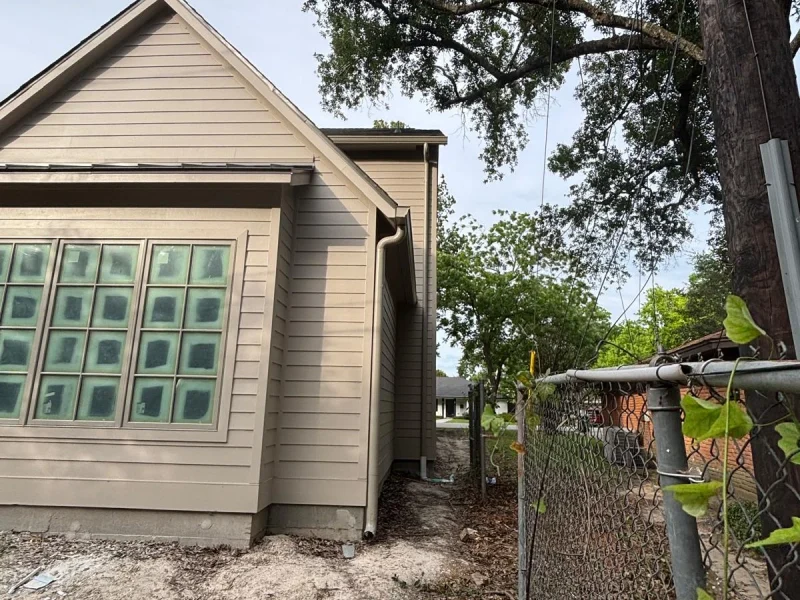
Most Houston homeowners pay attention to their gutters — but far fewer think carefully about where the water goes once it leaves the downspout. That last step in the drainage process is just as important as everything that comes before it, and when a downspout discharges water in the wrong direction, the damage it causes is rarely visible until it has already become a serious and expensive problem.
In Houston’s high-rainfall environment, a misdirected downspout isn’t just a minor inconvenience — it’s one of the most common and underestimated causes of foundation damage on residential properties across the city.
What a Misdirected Downspout Actually Looks Like
Not every drainage problem is obvious. A downspout doesn’t have to be visibly broken or pointing sideways to be causing damage. In fact, some of the most damaging situations involve downspouts that look completely normal at first glance.
Common misdirected downspout scenarios include:
- A downspout that terminates at ground level with no extension, discharging water directly against the foundation wall
- A downspout extension that is too short, depositing water only a foot or two away from the house
- A splash block that is cracked, missing, or sloped toward the house instead of away from it
- A downspout that discharges onto a concrete surface that slopes back toward the foundation
- An underground downspout connection that has become blocked or disconnected, causing water to back up and saturate the soil at the base of the wall
Each of these situations sends water toward your foundation repeatedly — every single time it rains.
How the Damage Develops Over Time
The damage caused by a misdirected downspout doesn’t happen overnight. It builds gradually through a cycle that repeats with every rainstorm, making it easy to overlook until the effects become undeniable.
- Soil Saturation and Expansion
When a downspout discharges water directly against the foundation, the surrounding soil absorbs that moisture and expands. In Houston, where clay-heavy soil is the norm, this expansion creates lateral pressure against the foundation wall — pressure that increases with every rain event and every inch of water discharged in the wrong place.
- Soil Erosion at the Base
Over time, the concentrated force of water exiting a downspout without proper diffusion erodes the soil at the base of the wall. As that soil washes away, voids form beneath and around the foundation — removing the stable base the structure depends on and creating conditions for settling and cracking.
- Foundation Shifting and Cracking
As the soil alternates between saturated expansion and dry contraction — a cycle that happens repeatedly throughout Houston’s rainy and dry seasons — the foundation beneath your home shifts. Over months and years, that movement produces cracks in the foundation slab, exterior walls, and interior finishes that are expensive to repair and often misdiagnosed as unrelated structural issues.
- Water Intrusion Into the Home
When water consistently pools against a foundation wall, it eventually finds a way in. Hairline cracks widen with each wet-dry cycle, and water migrates through them into crawl spaces, slab edges, and interior floor systems — creating conditions for mold growth, wood rot, and ongoing moisture damage that compounds over time.
Why Houston Homes Are Especially Vulnerable
Houston’s combination of high annual rainfall, expansive clay soil, and intense storm events makes the consequences of a misdirected downspout more severe than in most other parts of the country.
- Over 49 inches of rain per year means a misdirected downspout has dozens of opportunities to saturate the soil around your foundation annually.
- Clay soil retains moisture far longer than sandy or loamy soil, prolonging the period of expansion and lateral pressure after each rain event.
- Tropical storms and hurricane-related rainfall can dump several inches in a matter of hours — sending enormous volumes of water to whatever point the downspout directs it.
- Many Houston neighborhoods feature mature trees with extensive root systems that further disrupt soil stability when combined with chronic moisture from misdirected drainage.
The Fix: Proper Downspout Extension and Drainage Direction
The good news is that a misdirected downspout is one of the most straightforward drainage problems to correct — especially when caught before significant foundation damage has already occurred.
- Downspout extensions should direct water at least 4 to 6 feet away from the foundation, preferably toward a yard area that slopes away from the house.
- Splash blocks should be properly positioned and sloped away from the wall to diffuse water and prevent soil erosion at the discharge point.
- Underground drainage connections should be inspected regularly to ensure they remain clear and functional, particularly after heavy storm events.
- Yard grading around the discharge area should slope away from the foundation to prevent water from migrating back toward the house after it exits the downspout.
- Extended downspout runs using flexible or rigid piping can carry water to a designated drainage area, retention basin, or street-level drainage point well away from the structure.
How to Tell If Your Downspout Has Already Caused Damage
If you’re not sure whether your current downspout setup has been causing problems, look for these warning signs around your home:
- Soil erosion or bare patches directly below downspout discharge points
- Visible cracks in the foundation, exterior brick, or interior drywall
- Doors or windows that stick, bind, or no longer close correctly
- Efflorescence — white mineral deposits — on foundation walls or exterior brick near the base
- Persistent moisture, musty odors, or mold in crawl spaces or along interior slab edges
- Uneven or sloping floors inside the home
Any combination of these signs warrants a professional inspection sooner rather than later.
Don’t Let a Simple Fix Become a Costly Repair
A downspout extension costs a fraction of what foundation repair does. In Houston, where the soil and climate conditions amplify the impact of every drainage misstep, getting your downspouts directing water correctly is one of the highest-return maintenance decisions you can make as a homeowner.
At Mairena Gutter Services LLC, we inspect, repair, and reconfigure downspout systems throughout the Houston area — making sure every drop of water that moves through your gutter system ends up exactly where it should: well away from your foundation and your home.
Contact us today or book your free estimate and make sure your new home’s gutter system is ready for whatever Houston’s weather brings next.